

Key Takeaways
- Inflation is one of the main reasons to stay invested in retirement. The goal isn’t just growing wealth, it’s making sure your income can keep up with rising costs.
- Over the long run, stocks have been the one asset class that consistently beats inflation, even though periods of high inflation are tough on both stocks and bonds.
- Benefiting from that growth means accepting market volatility and riding it out.
- If your portfolio has grown, give yourself a raise. Automatically increasing your portfolio income each year is a simple way to keep pace with the cost of living.
Inflation has been front and center in everyone’s minds over the last few years. This summer and fall, we have been seeing it and feeling it at the gas station and at the grocery store, and as we roll into the mid-term elections rising prices have dominated much of the political discussion.
While inflation has risen this year and been on our minds since the post-covid spike in 2022, we are also entering the fifth year of a bull market for stocks. While retirees hate inflation as much as anyone, if you are relying on a well-invested portfolio for your income, you most likely have the means to give yourself a raise.
Inflation Is a Reason to Stay Invested
I do not think financial planners talk about this enough: Inflation, and the need to regularly and naturally increase your spending as the cost of living rises, is one of the main reasons to remain invested during retirement. Often, we’re not trying to grow a client’s portfolio just for the sake of increasing wealth, but to ensure that the client’s income stream can increase over time along with the cost of living.
This occurred to me this morning while composing a reply to a client email where she noted the increasing costs of very real, everyday things she is paying for and how her monthly income is feeling tight. My natural response was, “hey, we’re ready for this. While prices have risen, so has your portfolio. Let’s increase your income.” Every financial planner builds their clients’ plans with inflation in mind, but once the plan has been implemented, it might fall into the background if we don’t intentionally come back to it.
Why Stocks Belong in a Retirement Portfolio
Inflation stinks. It is particularly bad for people without assets living on fixed incomes, and I understand what I am writing here only applies to those fortunate to have assets that have been growing over the past few years. If you own a home, the price has likely soared. If you are trying to buy a home, it probably feels like the price has soared out of reach. If you have a 401k or IRA, invested well, your portfolio has risen with a strong bull market, but if you are trying to save for retirement, rising cost of living just makes it that much harder to set aside funds for the future.
But if you have saved and invested in a diversified portfolio, remember that this is WHY planners advise you to put up with volatility and include some stock market risk in your portfolio: Because, over time, the one asset class that consistently beats inflation has been stocks.
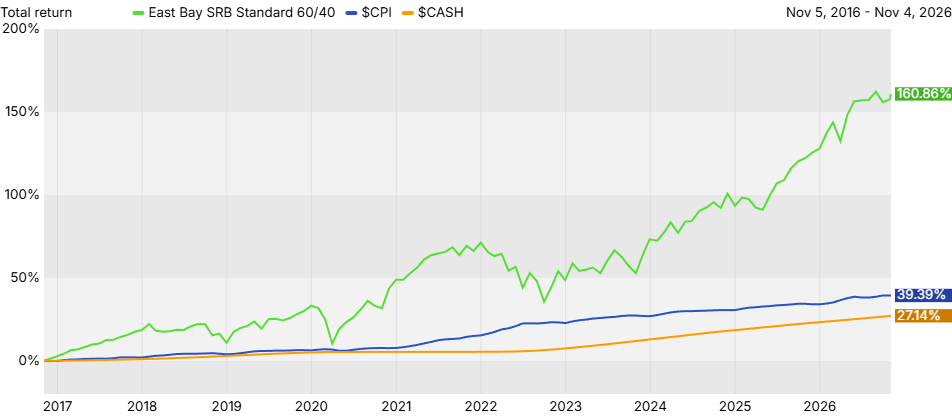
(Chart CPI vs. 60/40 model)
Expect Volatility Along the Way
It’s important to keep in mind that while stock investments and diversified portfolios do beat inflation consistently over the long-haul, periods of intense inflation are bad for both stocks and bonds. The idea here is not that stocks do well DURING inflation, but that through a longer economic cycle, the gains in the stock market offset the damage done by inflation, leaving you ahead of the game and able to increase your income as needed. But it is important to remember that you still need to be willing to accept the volatility of the stock market and ride it out.
Don’t Forget to Give Yourself a Raise
The other thing to keep in mind is that you need to be willing to give yourself a raise from your portfolio to take advantage of the growth. This seems obvious, but in action I’ve found that clients will complain about inflation but are reluctant to turn the gains they have seen in their portfolio into a higher monthly income to offset higher costs. We have started to encourage clients to automatically increase their portfolio income every year to account for inflation. After all, we incorporate assumed inflation into our financial plans – we should reinforce this through our behavior.