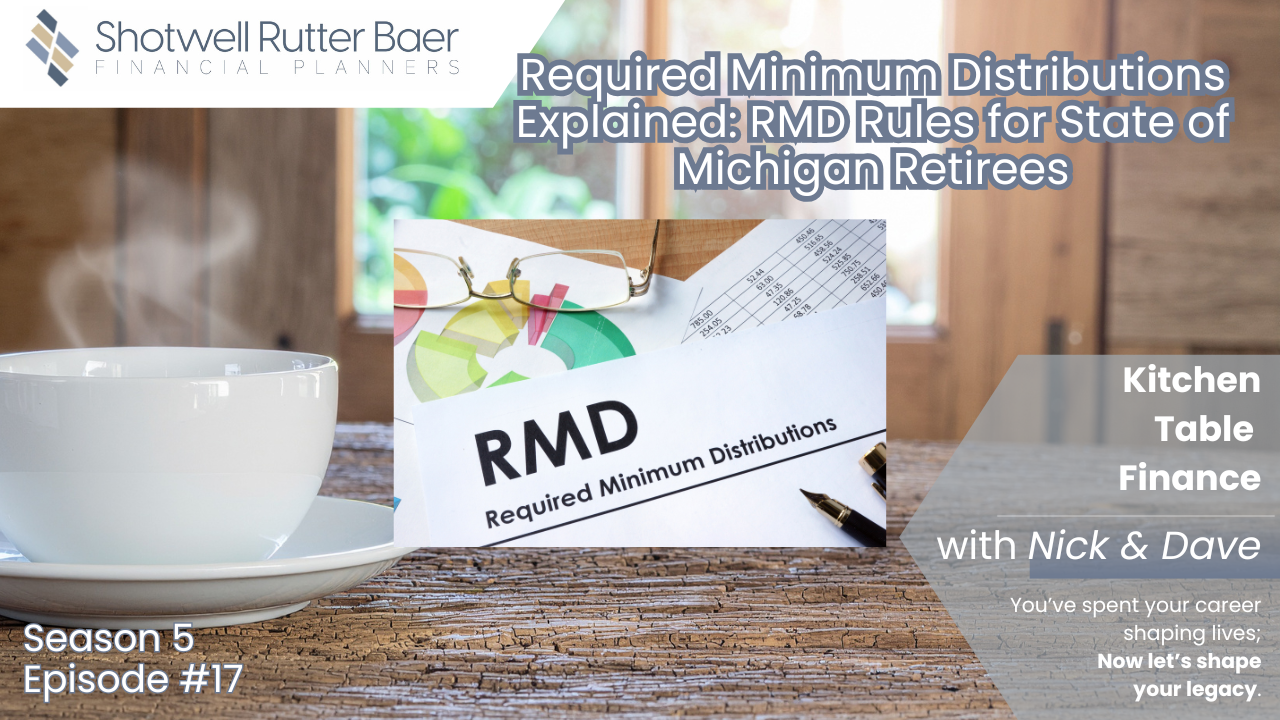

Required minimum distributions, better known as RMDs, are an important part of retirement tax planning. Knowing when they begin is only the starting point.
In this episode of Kitchen Table Finance, Dave Shotwell and Nick Nauta explain how RMDs work and why planning ahead can matter. They also discuss considerations for State of Michigan employees with 401(k), 457, and IRA accounts.
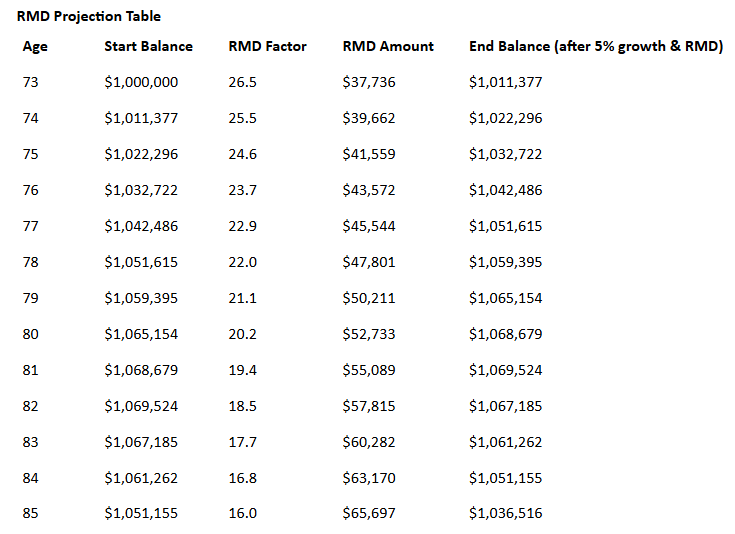
Dave and Nick walk through how an RMD is calculated using your prior year-end account balance and an IRS life expectancy factor. They use a $1 million retirement account as an example to show how distributions can grow throughout retirement.
They also explain why waiting until RMDs begin can leave you with fewer planning choices. Roth conversions, account organization and charitable giving strategies may be worth reviewing years before your first required distribution.
The conversation covers several RMD rules retirees can easily overlook, including account aggregation rules, first-year deadlines and tax withholding. Dave and Nick also discuss what happens when someone continues working after reaching RMD age.
For State of Michigan employees, account type matters. A retiree could have money spread across a 401(k), 457 and IRA. Those accounts do not always share the same RMD aggregation rules, which can make planning and account organization especially useful.
You will also hear about qualified charitable distributions, or QCDs. For charitably inclined people, a QCD may provide another way to meet retirement income and charitable giving goals.
Most importantly, RMDs do not need to become a source of unnecessary worry. They are another part of retirement that deserves thoughtful planning based on your income, taxes, and goals.
In This Episode
- What a required minimum distribution is
- When RMDs begin
- How RMD amounts are calculated
- Why your first RMD deadline deserves extra attention
- Which retirement accounts are subject to RMD rules
- RMD considerations for State of Michigan 401(k) and 457 accounts
- How IRA and employer plan aggregation rules differ
- What happens if you are still working at RMD age
- How Roth conversions can affect future RMDs
- How qualified charitable distributions work
- Why tax withholding matters when taking RMDs
- Common RMD mistakes retirees should watch for
- Why retirement tax planning can begin years before RMD age
Resources
Specialized financial planning for MSU faculty and staff navigating the transition from campus to retirement. https://srbadvisors.com/michigan-state-university-faculty/
Specialized financial planning for State of Michigan employees who want to make the most of their benefits and retire with confidence. https://srbadvisors.com/state-of-michigan-employees/
Contact SRB today at 517-321-4832 or email us at info@srbadvisors.com. Don’t forget to subscribe to our channel for more bite-sized financial and retirement tips. https://www.youtube.com/@shotwellrutterbaer.
Podcast: Play in new window | Download